
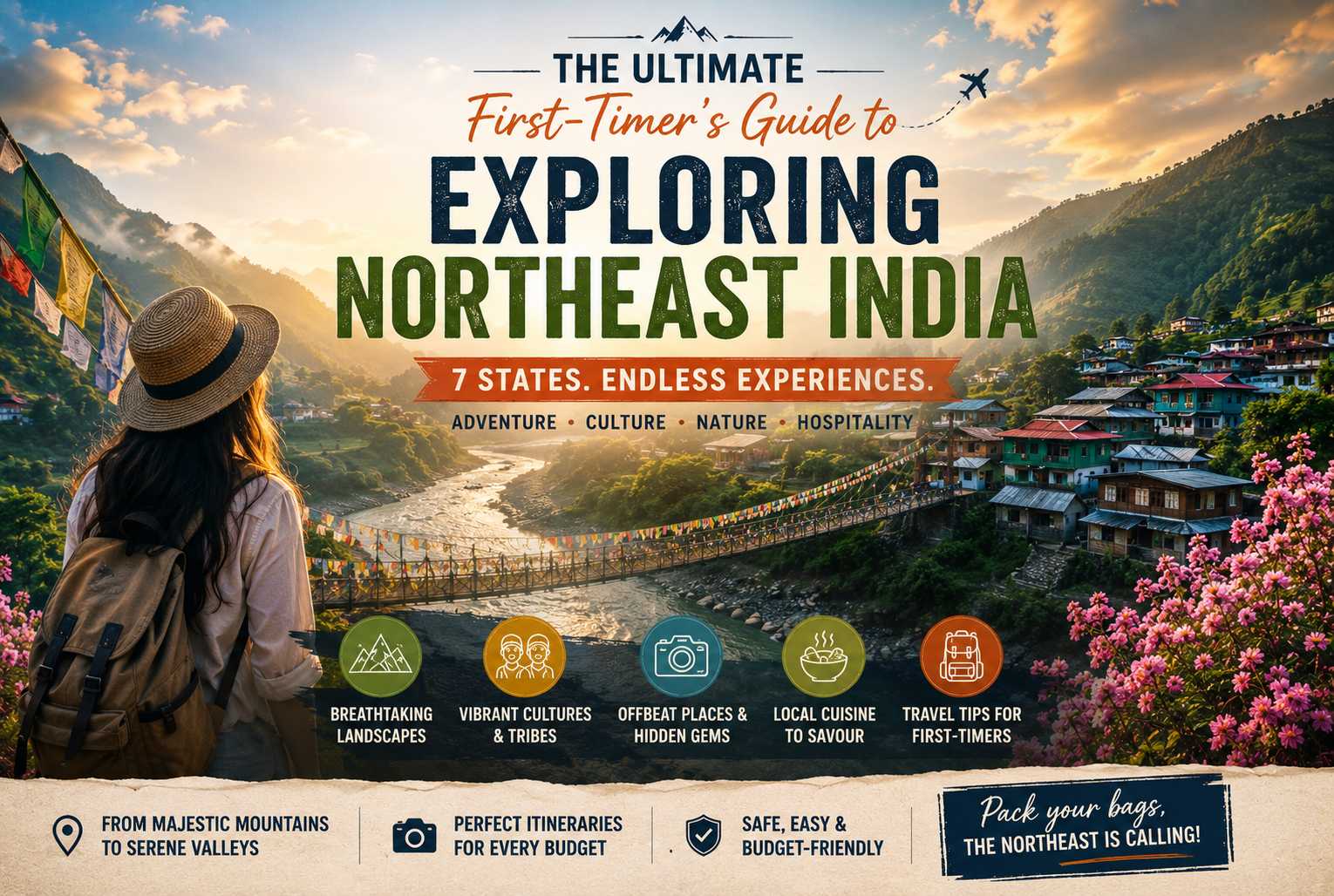
For decades, the standard Indian holiday meant fighting through crowds in Manali, Goa, or Rajasthan. But the modern traveler is looking for something different. They are looking for raw, unfiltered nature, unique cultural heritage, and pristine landscapes that haven't been paved over by mass commercialization.
Welcome to Northeast India.
Often described as the "Unexplored Paradise" of the subcontinent, the Northeast comprises eight distinct states—the Seven Sister States (Arunachal Pradesh, Assam, Meghalaya, Nagaland, Manipur, Mizoram, Tripura) and the Himalayan brother, Sikkim. Each state has its own language, cuisine, landscape, and deeply rooted indigenous traditions.
If this is your first time planning a trip to the region, the logistics can feel overwhelming. How do you get there? Do you need special permits? Which state should you visit first?
As a leading Guwahati-based travel agency,
One of the biggest reasons travelers hesitate to visit the Northeast is the confusion surrounding travel permits. Unlike most Indian states where you can simply book a ticket and arrive, certain border states require government authorization to enter. This is done to protect indigenous cultures and maintain border security.
Here is the straightforward breakdown:
States Requiring an Inner Line Permit (ILP) for Indian Citizens: Arunachal Pradesh, Nagaland, Mizoram, and Manipur.
States NOT Requiring an ILP for Indian Citizens: Assam, Meghalaya, and Tripura. (Sikkim does not require an ILP for the main towns, but you do need Protected Area Permits to visit restricted high-altitude borders like Nathula Pass).
Foreign Nationals: Non-Indian passport holders need a Protected Area Permit (PAP) or Restricted Area Permit (RAP) for states like Arunachal Pradesh and Sikkim.
Tripomart's Advice: Do not let the permit process intimidate you. When you book a
Northeast India is heavily defined by the monsoon. The heavy rains (June to September) bring life to the region, creating spectacular waterfalls in Meghalaya, but they also cause severe landslides and road closures in the mountains.
The Golden Season (October to April): This is the absolute best time to visit. The skies are clear, the weather is crisp, and the roads are in their best condition. This is prime time for wildlife safaris in Assam and high-altitude trekking in Arunachal Pradesh.
The Monsoons (June to September): Travel is generally not recommended unless you are specifically visiting Meghalaya to see the rain. Cherrapunji and Mawsynram are the wettest places on earth, and watching the monsoon roll through these hills is a bucket-list experience for rain lovers.
If you are a first-time visitor, trying to cover all eight states in one trip is a massive mistake. The distances are vast, and mountain roads require slow driving.
We highly recommend starting with the "Big Three." These states offer the perfect blend of wildlife, waterfalls, and high-altitude adventure, all easily accessible from the Guwahati airport.
Assam is the central hub of the Northeast. The landscape is defined by the mighty Brahmaputra River and endless, rolling tea gardens.
Most travelers land at Lokpriya Gopinath Bordoloi International Airport in Guwahati and spend their first couple of days exploring Assam.
Must-Do: A jeep or elephant safari in Kaziranga National Park, a UNESCO World Heritage site and home to the world's largest population of the Great One-Horned Rhinoceros.
Don't Miss: Take a river cruise to Majuli, the world's largest river island, known for its unique Vaishnavite monastic culture (Sattras).
Explore More: Check out our
Just a three-hour drive south of Guwahati brings you to the hills of Meghalaya. This state is famous for its crystalline rivers, massive cave systems, and a culture deeply intertwined with nature.
Must-Do: Trek down to the Living Root Bridges in Nongriat or Dawki. The indigenous Khasi and Jaintia tribes have spent centuries guiding the roots of rubber trees across rivers to form living, breathing bridges that grow stronger over time.
Don't Miss: Boating on the Umngot River in Dawki, where the water is so clear that boats appear to be floating on air.
Explore More: Browse our
If you crave rugged, high-altitude adventure, Arunachal Pradesh is the crown jewel. It is the easternmost state in India, meaning it is the first place in the country to see the sunrise.
Must-Do: The drive through the snow-covered Sela Pass (13,700 feet) to reach the town of Tawang.
Don't Miss: The Tawang Monastery, the largest Buddhist monastery in India and the second largest in the world after the Potala Palace in Lhasa. The spiritual energy here is profound.
Explore More: View our
To help you understand the scale and differences between these regions, explore this interactive comparison of the Northeast states:
The terrain in the Northeast is notoriously challenging. While the main highways in Assam are excellent, the mountain roads in Meghalaya and Arunachal Pradesh can be steep, narrow, and winding.
Self-Driving: We do not recommend self-driving for first-time visitors unless you have extensive experience driving on high-altitude Himalayan roads.
Shared Cabs (Sumos): This is the cheapest way to get around, but it is highly uncomfortable. Ten people are often squeezed into a single vehicle, and you cannot stop for photos.
Dedicated Tourist Vehicles: This is the Tripomart standard. Having a dedicated SUV (like an Innova or Scorpio) with a seasoned local driver is the only way to travel. A local driver understands the fog patterns, knows where the road has washed out, and knows the best local roadside dhabas for authentic food.
Planning a trip to a region with eight states, varied permit requirements, and unpredictable mountain weather is not something you should leave to a generic, algorithm-driven booking site.
When you book with us, you get:
100% Transparent Pricing: No hidden taxes or sudden driver demands.
Guaranteed Permits: We handle the bureaucracy so you can focus on the holiday.
Local Expertise: Our drivers are your personal guides, deeply knowledgeable about local folklore, safety, and hidden gems.
Northeast India is not just a destination; it is an experience that will change how you view travel.
Ready to explore the Unexplored Paradise?
Demystifying Permits: ILP and PAP Explained
When is the Best Time to Visit?
The "Big Three" States: Where to Start
Assam: The Gateway and the Wildlife Capital
Meghalaya: The Abode of Clouds
Arunachal Pradesh: The Land of Dawn-Lit Mountains
Transportation: How to Get Around Safely
Why Travel with Tripomart?
(0) Comments:
Leave a Reply